
Best Carpet Colours for Bedrooms: A Melbourne Homeowner's Guide
Jo McAuliffe
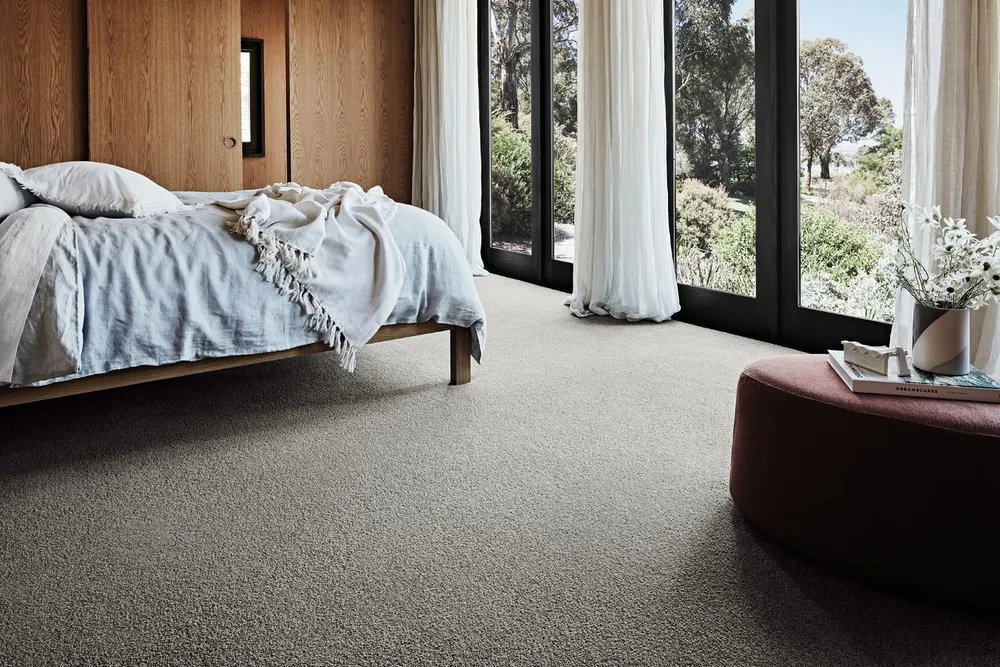
Choosing a carpet colour for a bedroom feels like it should be simple, until you’re standing in a showroom looking at forty shades of grey and beige and none of them feel obviously right. The colour you choose affects how big the room feels, how easy it is to keep looking clean, and how long you’ll be happy with it after the new-carpet excitement fades.
Bedrooms get less daylight variation and more direct scrutiny than living areas, since you see them morning and night in different light. That makes the colour decision higher-stakes than it is for a hallway or a rumpus room.
The short answer: soft, mid-tone neutrals (grey, oatmeal, dove white) suit the widest range of bedrooms, balancing light reflection, stain-hiding and long-term flexibility if you repaint or change furniture. Bolder colours work well in larger, well-lit rooms or for homeowners confident they won’t want to change the look in five years.
What colours are actually trending in Melbourne bedrooms right now
Soft grey leads demand in Camberwell Floorworld’s showroom, closely followed by warm neutrals like oatmeal, dove white and sandy beige. These tones dominate for a simple reason: they work with almost any wall colour, bedding and furniture style a homeowner might choose over the life of the carpet, which in a bedroom is often a decade or more.
Neutral carpet is a flooring colour with no strong hue of its own (greys, beiges, whites and soft browns), chosen specifically so it doesn’t compete with or limit other decor choices. Charcoal and deep taupe sit at the darker end of this neutral family and are growing in popularity for main bedrooms, where homeowners want a more grounded, hotel-like feel.
Bolder colours (muted sapphire, forest green, terracotta) do appear in bedrooms, but usually as a considered choice in a larger main suite rather than a smaller or shared bedroom, where the room needs to stay flexible for years of changing taste.
Melbourne’s light also shifts noticeably between seasons, which matters more in a bedroom than almost any other room. Winter’s shorter, flatter daylight hours make a bedroom carpet read cooler and darker than it will on a bright summer morning. If you’re choosing a sample in July, it’s worth holding it near a window at a few different times of day rather than relying on a single quick look, since the same carpet can genuinely look like a different shade in winter light versus summer light.
How much does natural light affect the right colour choice?
A north-facing bedroom that gets strong afternoon sun can handle a darker carpet without feeling gloomy, because the light compensates for the colour. A south-facing or smaller-windowed bedroom, common in many of Camberwell’s older weatherboard and brick homes, will read noticeably darker with the same carpet than it would in a brighter room.
As a general rule, if a bedroom only gets direct sun for part of the day, lean one or two shades lighter than you think you want. Carpet always looks slightly darker underfoot in a room than it does held up as a sample under showroom lighting, and this effect is stronger in rooms with less natural light.
Does a dark carpet actually make a small bedroom feel smaller?
Sometimes, but it depends on what else is in the room. A dark carpet paired with light walls, light curtains and a visible floor around the bed still reads as reasonably spacious, because the eye has contrast to work with. A dark carpet paired with dark walls and heavy furniture will genuinely shrink the room visually, since there’s no contrast left to define where the floor ends and the walls begin.
If the bedroom is genuinely small (a child’s room or a secondary bedroom under around 10 square metres), a light or mid-tone neutral carpet is the lower-risk choice. It’s easier to add depth to a small bright room with furniture and textiles than it is to visually enlarge a small dark one.
Which carpet colour hides daily wear and tear best?
This is where many homeowners get the decision backwards. A flat, very light colour (pure white, pale cream) shows every mark, footprint and bit of dust clearly against its plain background. A flat, very dark colour shows lint, pet hair and dust just as clearly, in reverse. The colours that actually hide daily life best are mid-tone and slightly textured: a flecked grey, a heathered taupe, or a subtly patterned neutral.
| Carpet colour type | Shows stains/marks | Shows pet hair/lint | Best for |
|---|---|---|---|
| Flat light (white, pale cream) | High | Low on light hair, high on dark hair | Low-traffic main bedrooms, adults only |
| Flat dark (charcoal, navy) | Low on dark marks, high on dust | High | Main bedrooms with good light, minimal pets |
| Mid-tone flecked or heathered | Low | Low | Family bedrooms, kids’ rooms, homes with pets |
For a child’s bedroom or any room a pet has regular access to, a mid-tone flecked or heathered carpet is almost always the practical choice over a flat colour at either end of the scale.
Does the carpet fibre affect how a colour actually looks?
Yes, noticeably. Wool carpet, including the Bremworth collection Camberwell Floorworld stocks as the inner east’s exclusive stockist, takes dye differently to synthetic fibres like nylon or polyester, giving colours a softer, slightly more muted depth that tends to photograph and age well in natural light. Synthetic fibres can hold more saturated, consistent colour and often resist fading in sun-exposed rooms slightly better over time.
Neither is objectively better for colour. Wool suits homeowners after a warmer, more natural-looking tone; synthetic suits homeowners wanting a specific, consistent shade that won’t shift with the fibre’s natural variation. Either way, always look at the actual carpet sample in your own bedroom’s light before deciding. A colour that looks right under a showroom’s lighting can read quite differently at 7am with the blinds open.
Pile height and texture also change how strongly a colour reads. A deep, cut-pile carpet holds colour densely and looks richer in a dark tone, while a looped or textured pile scatters light across the surface, which softens a dark colour and adds subtle depth to a light one. If you’re torn between two similar shades, the one in a more textured pile is usually the safer, more forgiving choice for everyday living.
Should every bedroom in the house match?
Not necessarily. Many Camberwell homeowners run one consistent neutral carpet through hallways and living areas for visual flow, then choose a slightly different tone or texture for bedrooms, since these are more private, personal spaces that don’t need to match the parts of the house guests see. A main bedroom might go slightly darker and more luxurious (a deep taupe or charcoal), while children’s rooms lean toward practical mid-tones that hide marks.
The one consistency worth keeping across bedrooms is carpet type and underlay quality, mainly for comfort and acoustic reasons, rather than colour. Colour can reasonably vary room to room based on each room’s light, size and who uses it.
Getting the decision right before you commit
Carpet is one of the more expensive, harder-to-reverse decisions in a renovation, so it’s worth seeing genuine samples in your actual bedroom before deciding, not just under a showroom’s lighting. We bring real samples to your home as part of a free in-home measure and quote, so you can hold a colour up against your own walls, your own light and your own furniture before committing to anything.
Explore our Carpet range, including the exclusive Bremworth wool collection, or see how carpet compares to Hard Flooring options if you’re deciding room by room. For more on current carpet style directions, read Popular Carpets Interior Designers Are Loving Right Now or The Benefits of Wool Carpet.
Frequently Asked Questions
What is the most popular carpet colour for bedrooms?
Soft grey remains the most requested bedroom carpet colour in Camberwell Floorworld’s showroom, followed closely by warm neutrals like oatmeal and dove white. All three work with almost any wall colour and furniture style, which is why they outsell bolder options.
Does a dark carpet make a small bedroom feel smaller?
It can, but not always. A dark carpet with light walls and curtains still reads as spacious, while a dark carpet paired with dark walls will shrink the room visually. If the bedroom is genuinely small, a light or mid-tone neutral is the safer choice.
What carpet colour hides stains and pet hair best?
A mid-tone, slightly textured carpet (such as a flecked grey or warm taupe) hides daily marks, dust and pet hair far better than a flat, very light or very dark colour, which both show every mark against a plain background.
Should bedroom carpet match the rest of the house?
Not necessarily. Many homeowners run one consistent neutral carpet through living areas and hallways, then choose a slightly different tone or texture for bedrooms, since these are separate, more personal spaces that don’t need to match the main living flow.
Is wool carpet available in the same colour range as synthetic carpet?
Wool carpet, including the Bremworth range Camberwell Floorworld stocks exclusively for the inner east, comes in a genuinely broad colour range, from classic neutrals to deeper charcoals and warm earth tones, so choosing wool doesn’t mean a smaller colour choice.
Ready to see colours in your own light? Book a free Measure & Quote and we’ll bring real samples to your home.